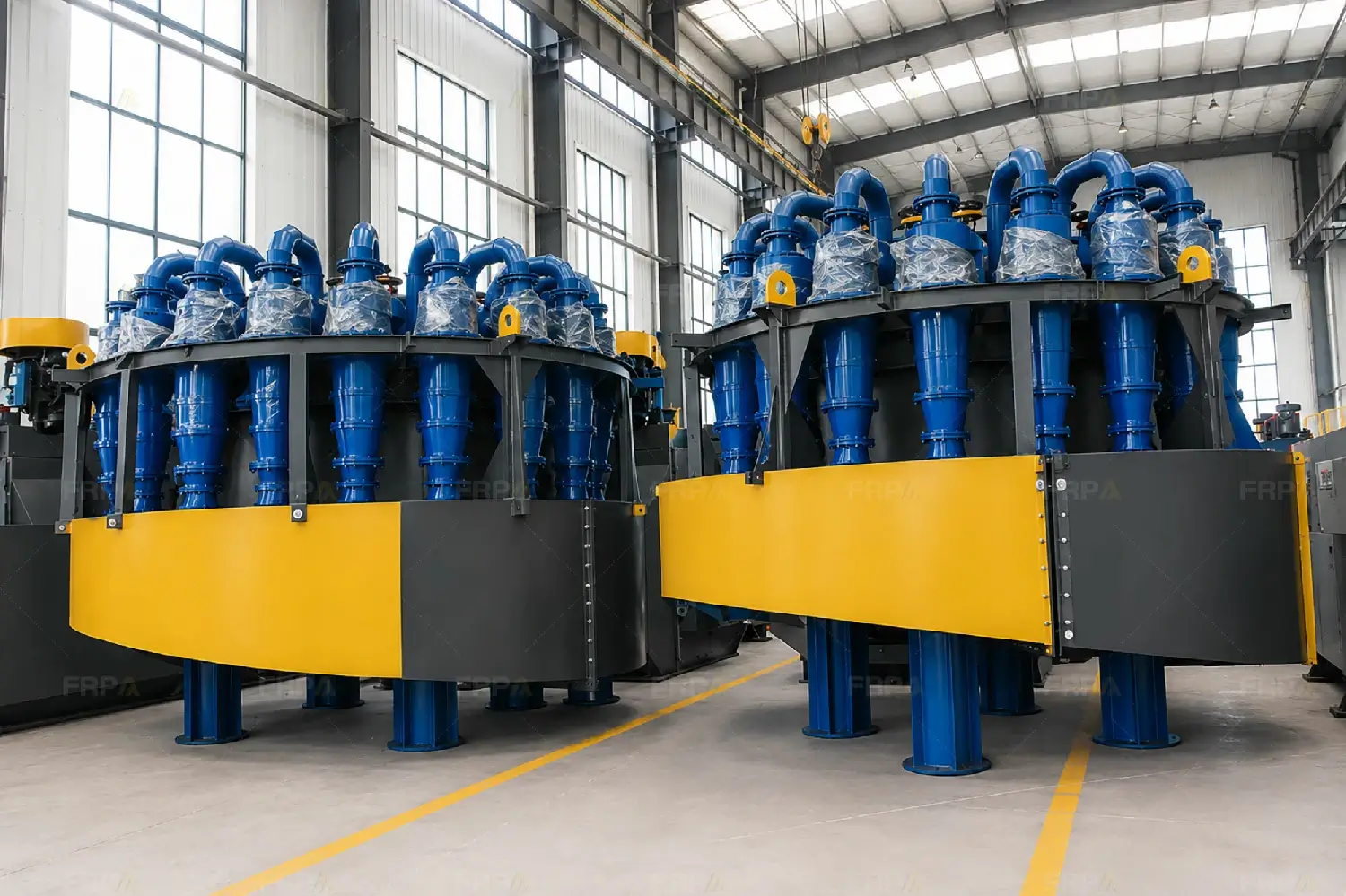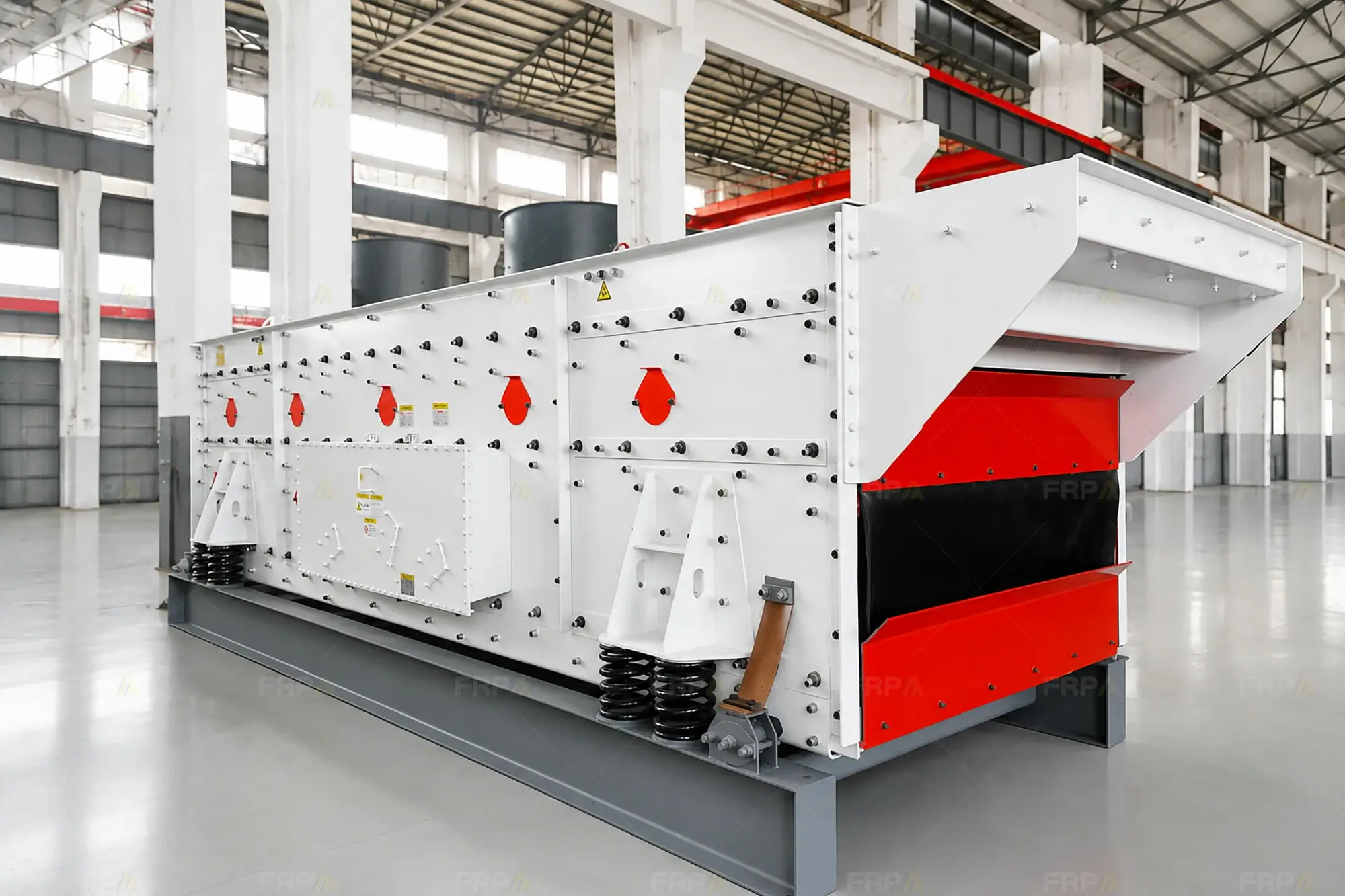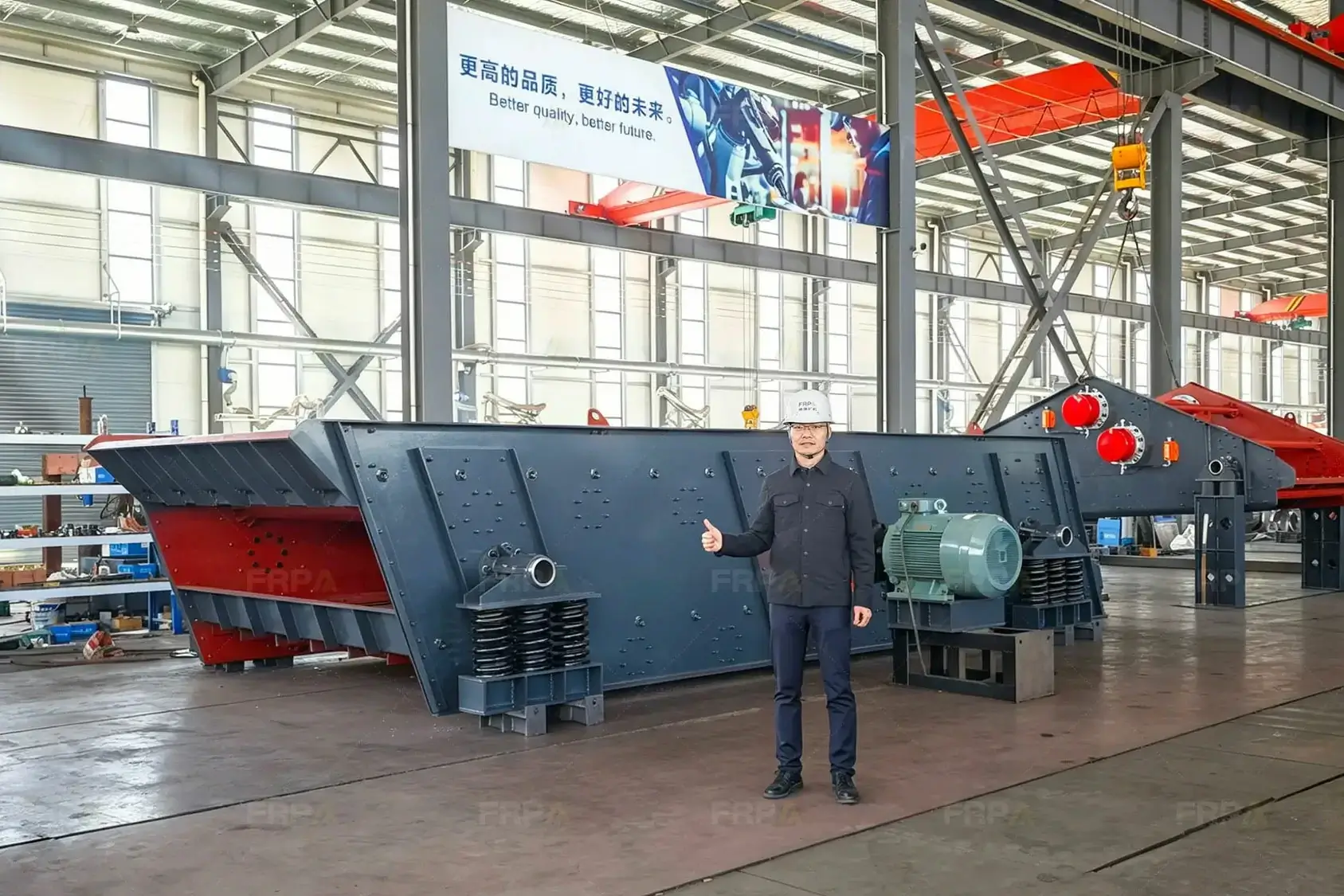





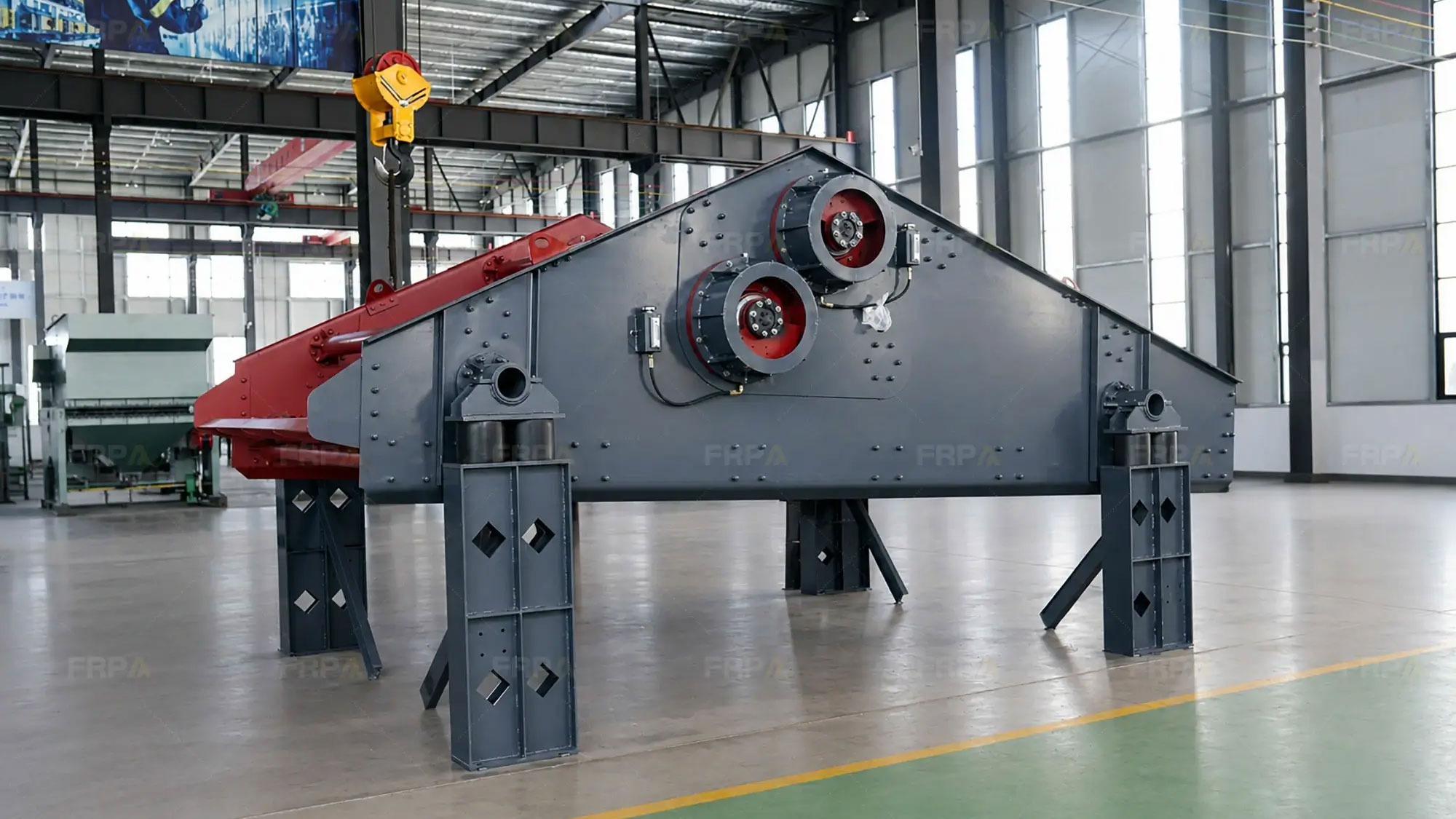
FRP dewatering screens are designed for the mechanical dehydration of sand, fine aggregates, and mineral slurries. Typically positioned downstream of hydrocyclones, sand washers, or fine sand recovery systems, they transform wet feed into low-moisture products suitable for immediate stockpiling and transport.
By leveraging high-frequency linear vibration combined with an uphill deck structure, the equipment drives water migration between particles for drainage through the screen apertures. Simultaneously, the solid material forms a dense bed and is conveyed toward the discharge end to ensure stable dehydration. The final product typically achieves a moisture content of 8%–13%, depending on particle size distribution, clay content, and material surface characteristics.


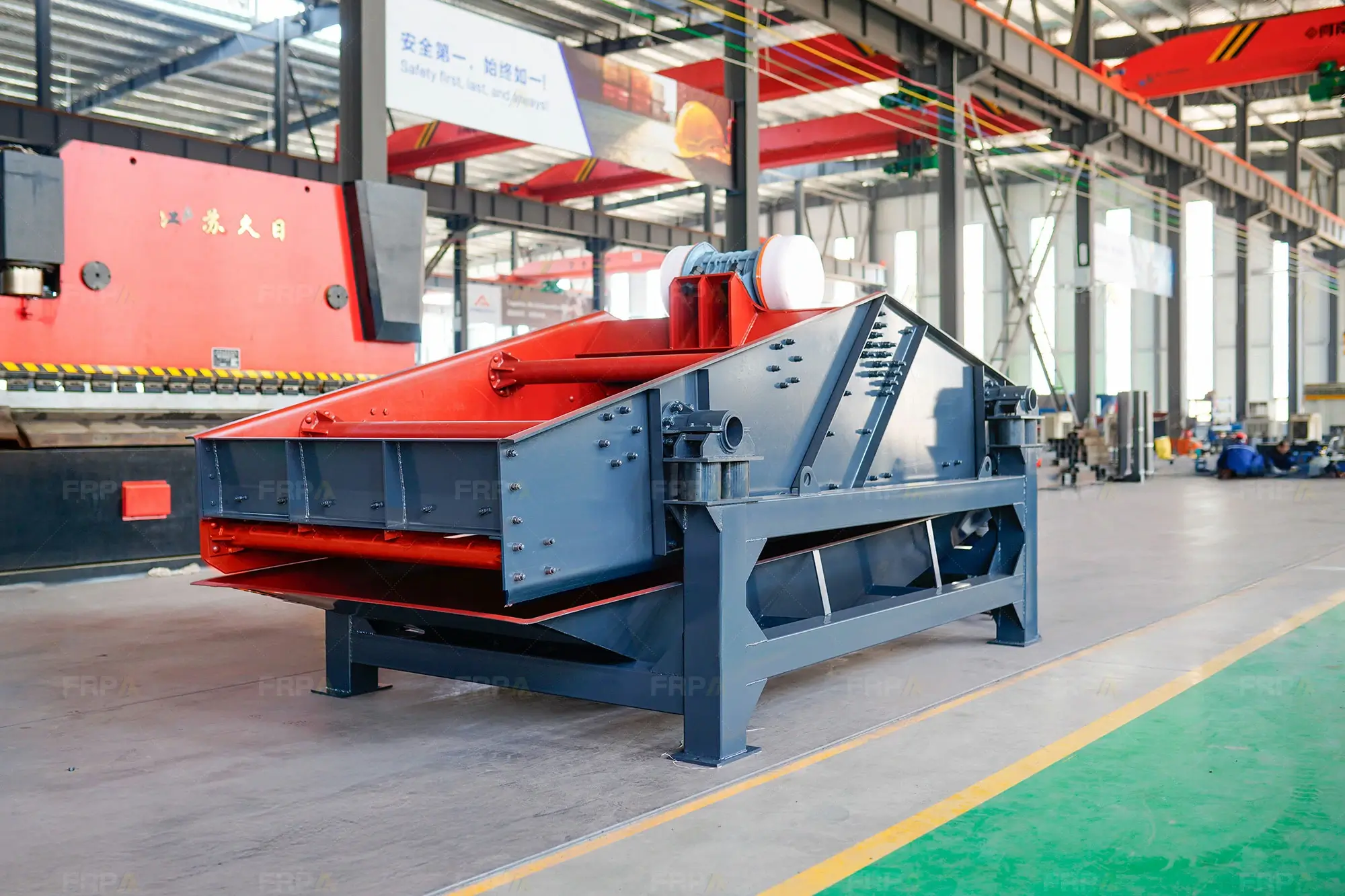
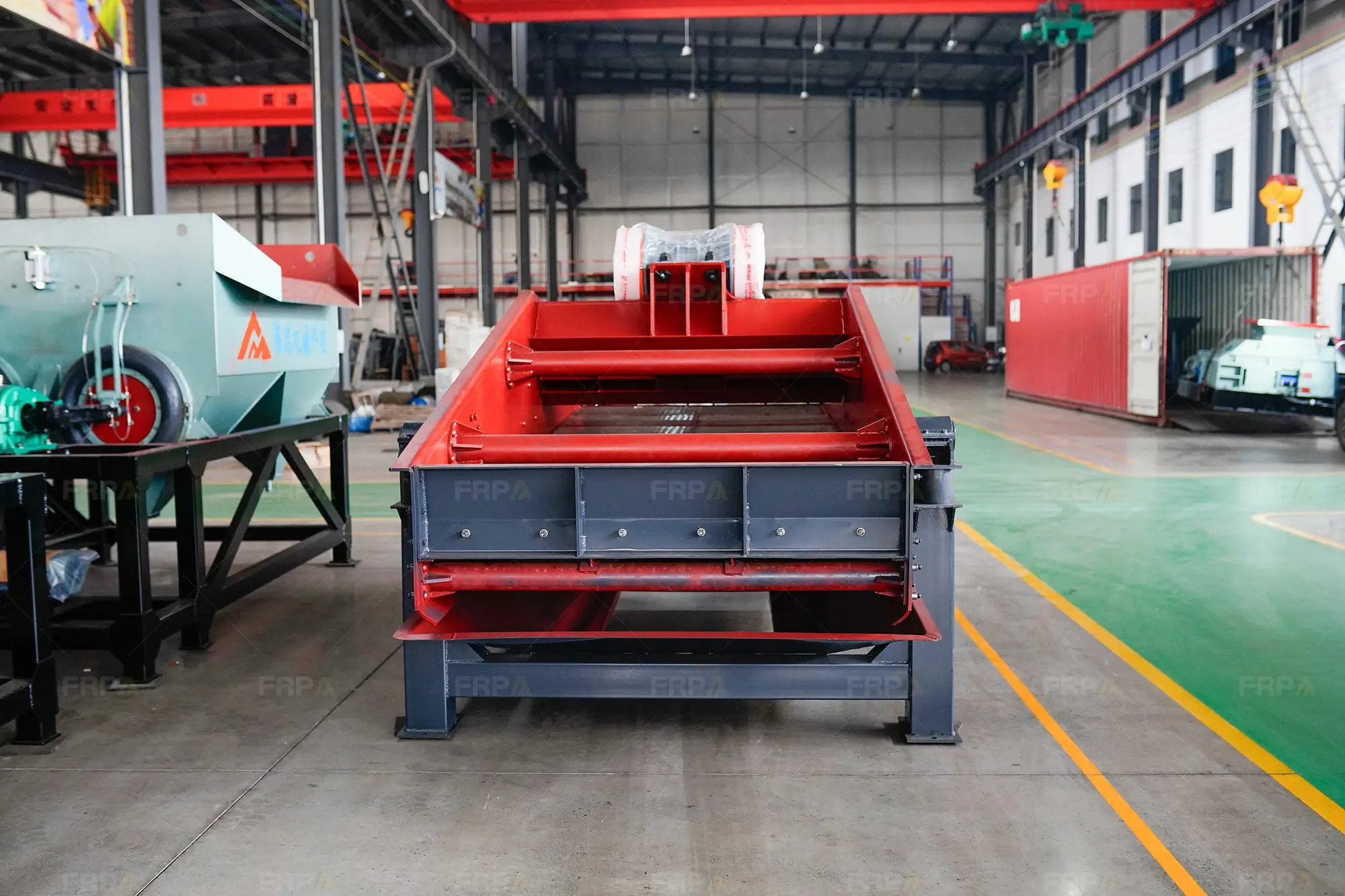
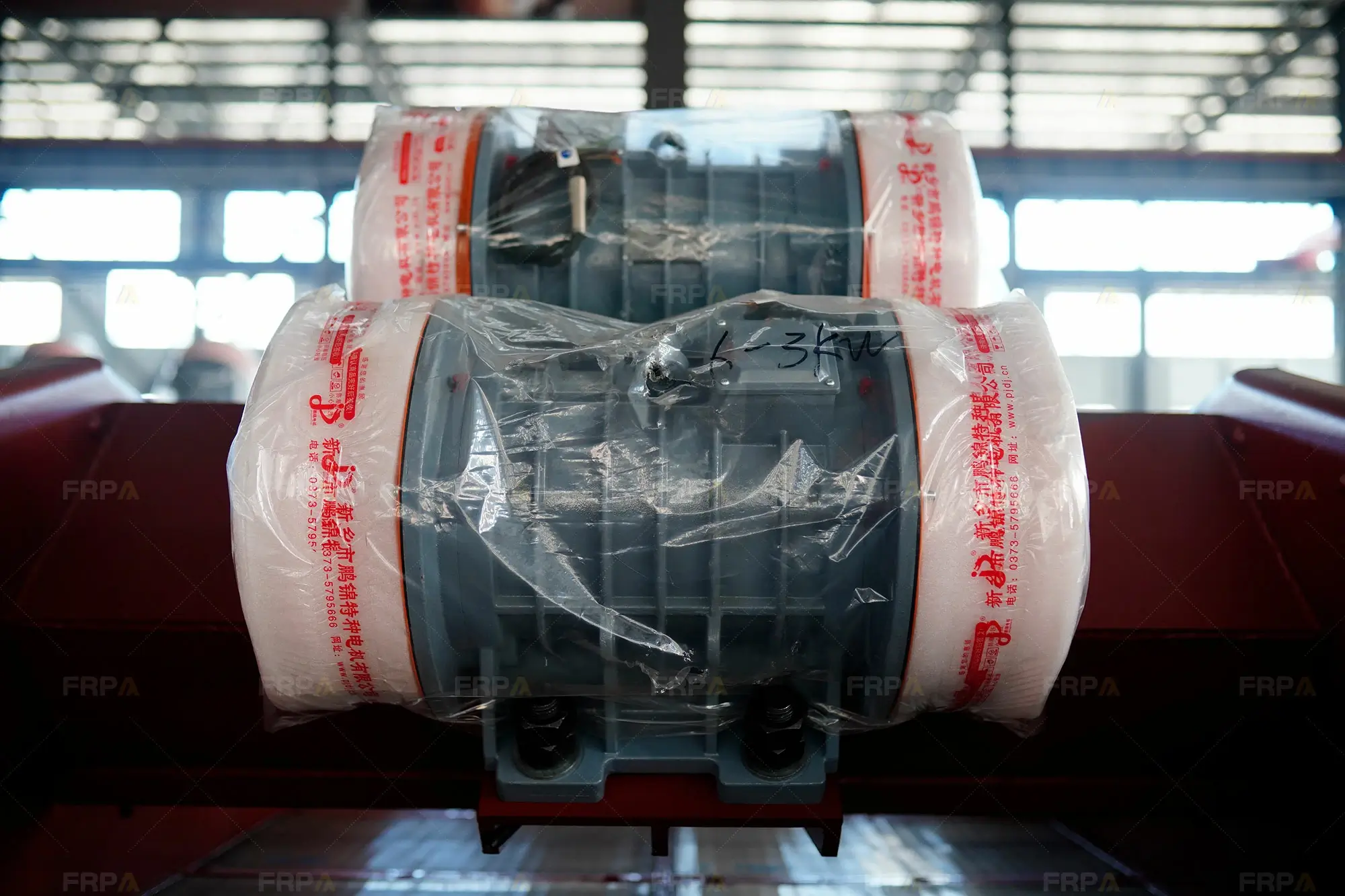
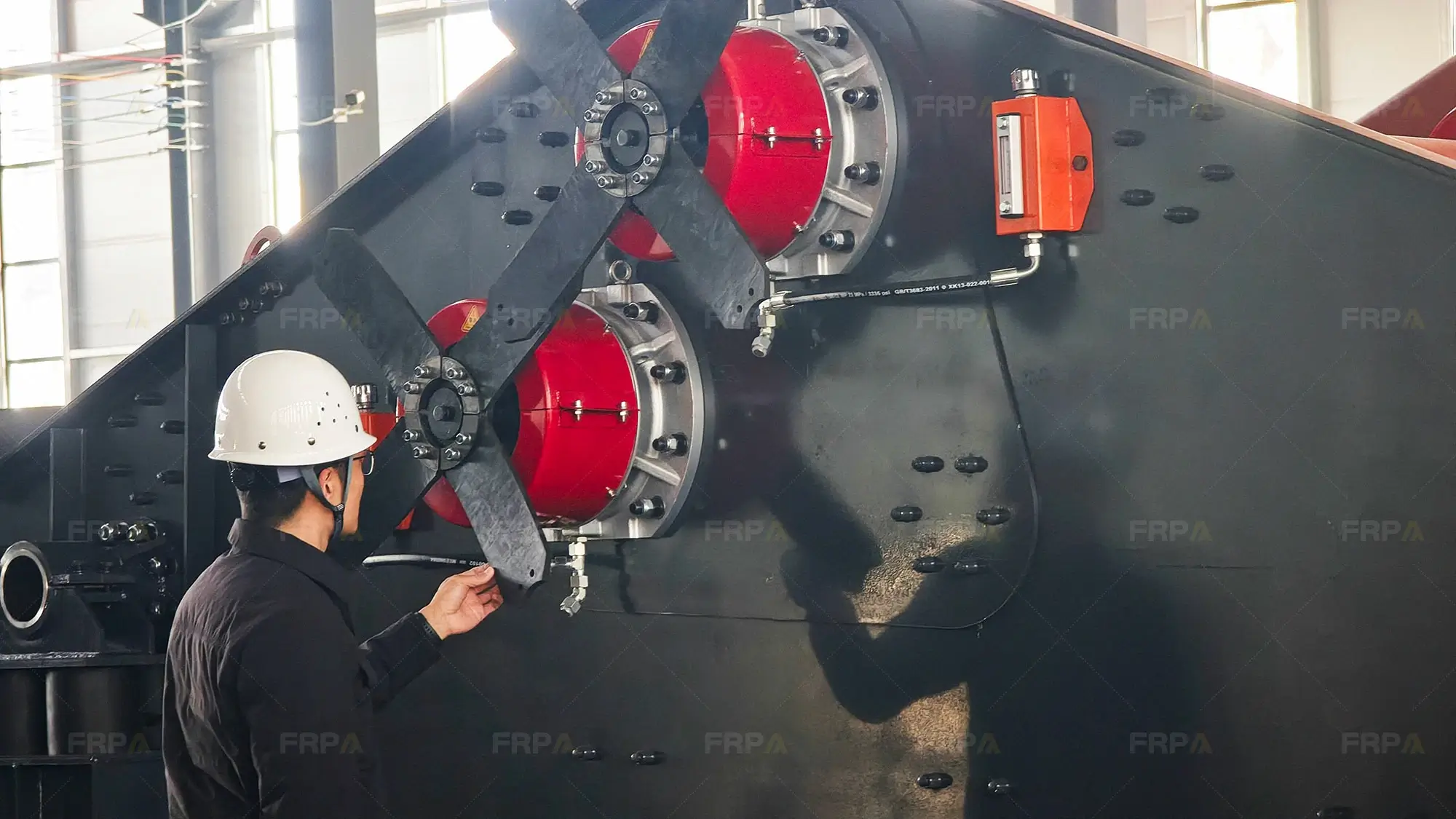
Once the slurry is evenly distributed across the screen surface, two counter-rotating vibratory motors (or exciters) generate a high-frequency linear motion at an angle to the deck, producing accelerations of up to 5G. This motion throws the material repeatedly and conveys it toward the discharge end.
The vibration, operating at high frequency, drives rapid water migration between particles and promotes droplet formation. Through this cyclic throwing motion, water is efficiently separated and passes through the screen apertures, while solids are continuously conveyed forward.
The uphill deck angle and discharge weir create a thick material bed, which serves as a filtration layer. This deep bed retains fine particles smaller than the aperture size while allowing excess water to drain downward.
This process establishes a counter-flow mechanism — solids moving upward and liquid percolating downward. As a result, the final product achieves a low moisture content, typically in the range of 8–13% by weight, suitable for direct stockpiling or further processing.
Aggregates Production: Used to rapidly dewater washed sand and gravel, resulting in an extremely low moisture content for easy transportation and stockpiling.
Tailings Treatment: Used in mineral processing plants to separate solid particles from slurry, reducing pollution and land usage of tailing ponds, while also recovering valuable resources.
Coal Preparation: Used to dewater fine coal and coal slurry to meet market requirements for moisture content, facilitating transportation and storage.
Chemical Industry: Used to separate solid products or waste from liquid media during chemical production or waste treatment.
FRP dewatering screens are engineered for superior dewatering performance, delivering a consistently drip-free product with moisture contents as low as 8%, significantly enhancing product quality and market value. With versatile single- and double-deck configurations, the screens can handle two product streams on a single machine to meet diverse operational requirements. In addition, they integrate seamlessly with spiral washers, hydrocyclones, and other processing equipment to ensure a drier, cleaner final product.
To match varying material characteristics and process demands, FRP offers two optimized screen panel solutions:
Polyurethane (PU) Screen Panels
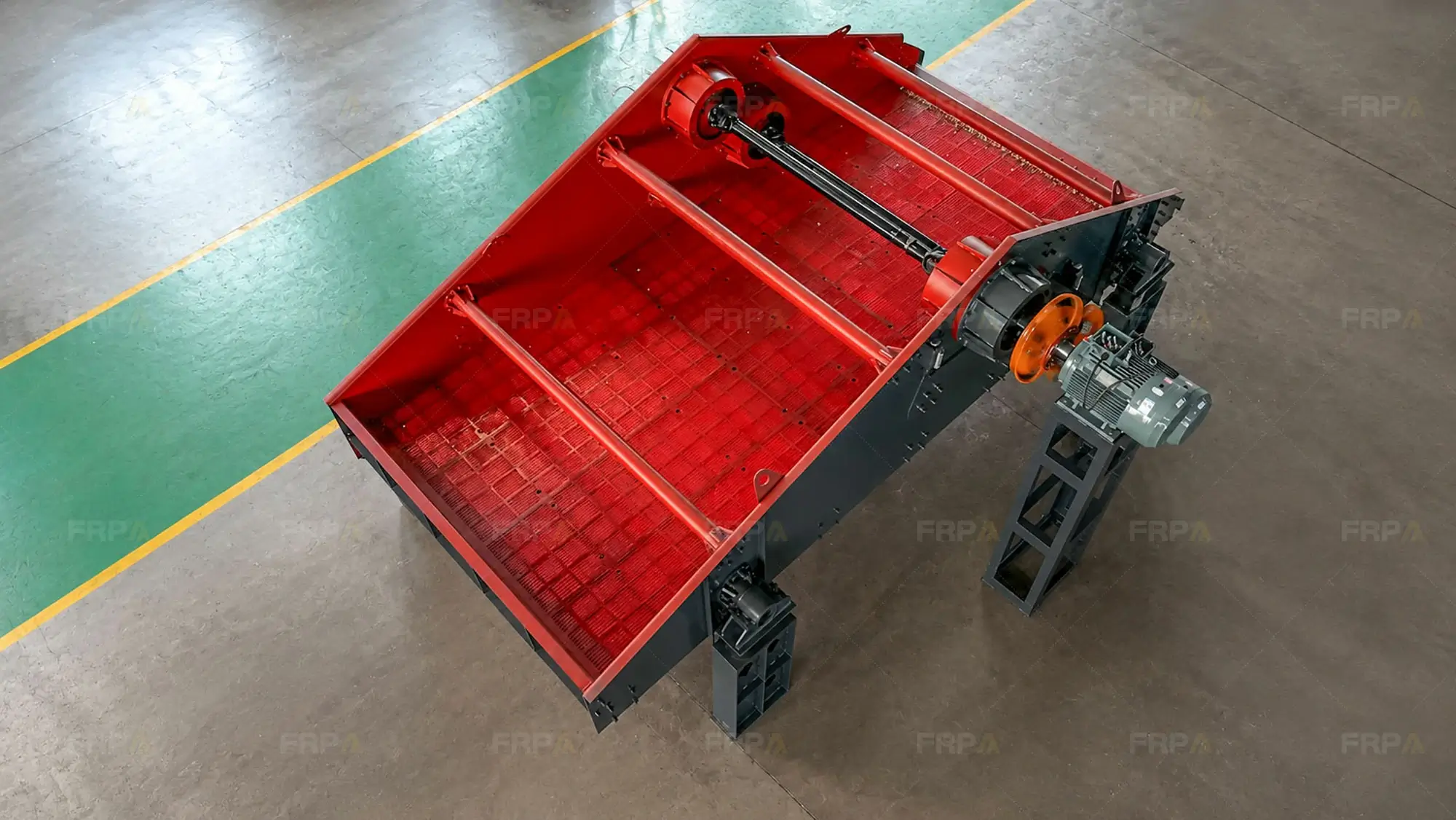
Designed for maximum durability in abrasive environments, PU panels provide excellent wear resistance and structural stability.
*Extended service life under high-wear conditions
*Reduced maintenance frequency and operating cost
*Ideal for coarse materials and heavy-duty applications
PU-Edged Stainless Steel Screen Panels
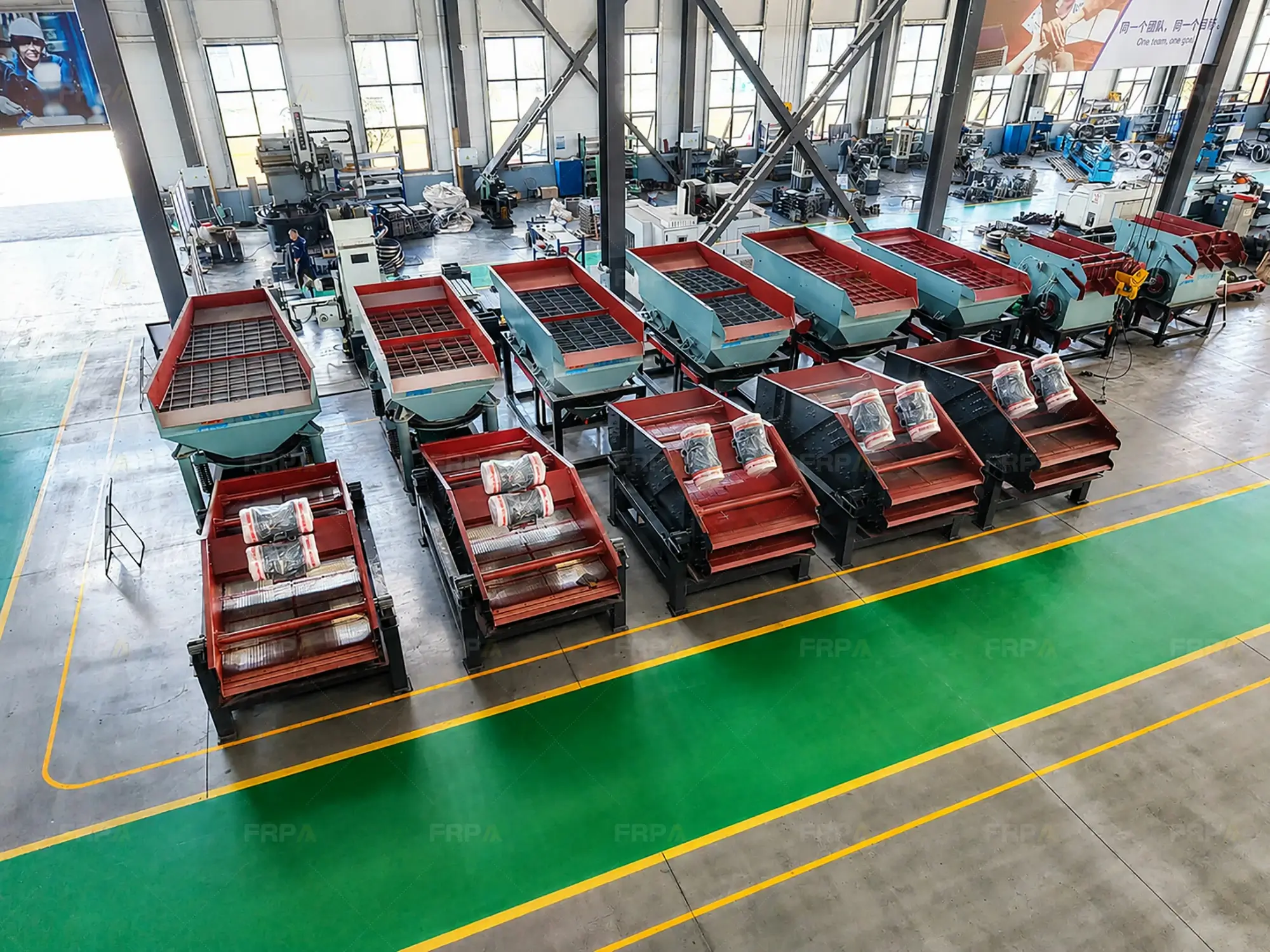
Engineered for maximum dewatering efficiency, these panels combine a stainless steel core with PU edge protection.
*Significantly higher open area for improved water drainage
*Faster dewatering and lower final moisture content
*Optimized for fine materials and challenging slurry conditions
FAQ for Dewatering Screen
We don't just deliver machines — we deliver assurance.
From installation to long-term service, we're by your side with ongoing support to keep your equipment running at its best.
Have a question, need advice, or want to schedule an appointment? We're happy to assist with any inquiries you have about our equipment and system solutions.