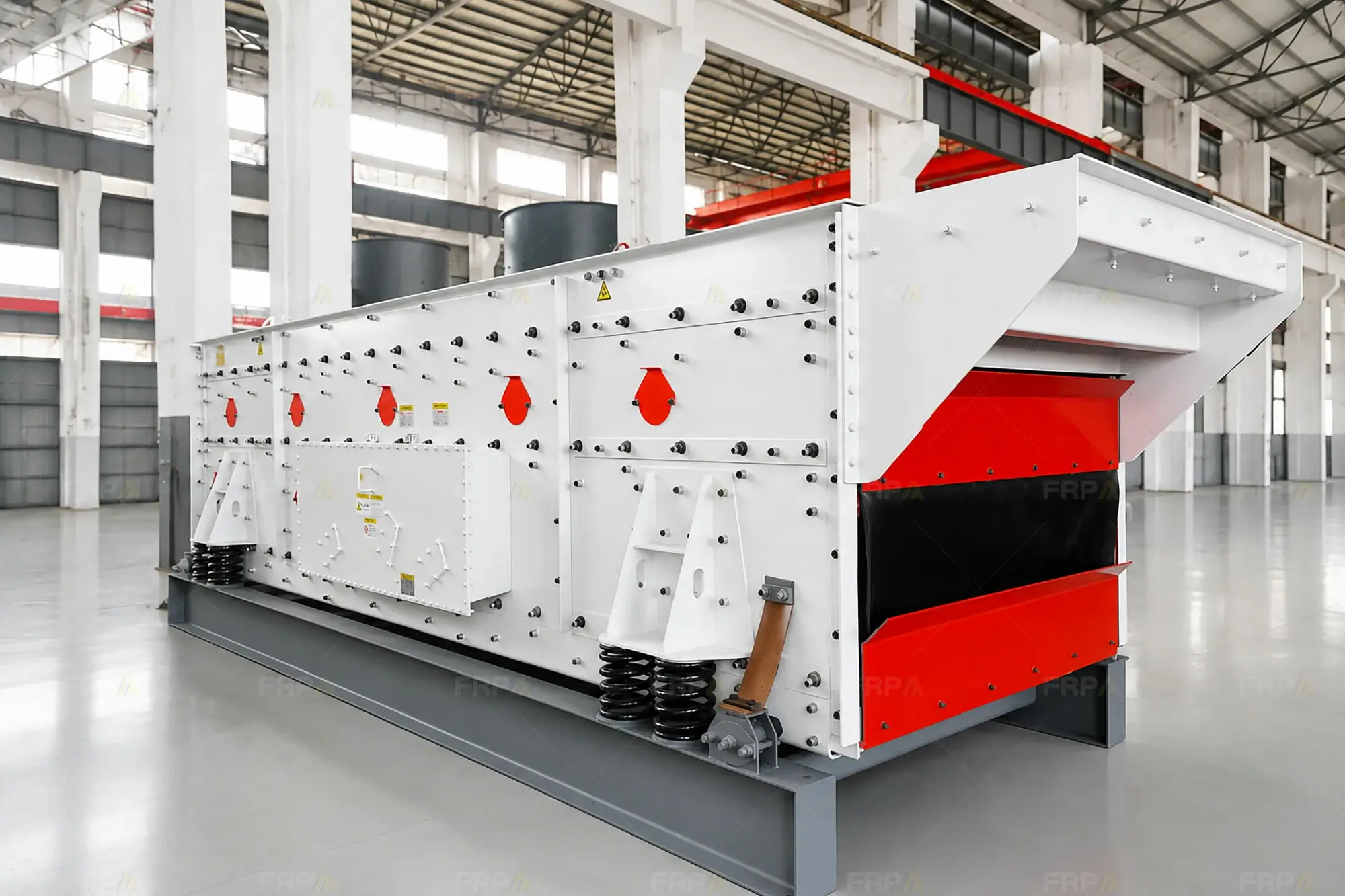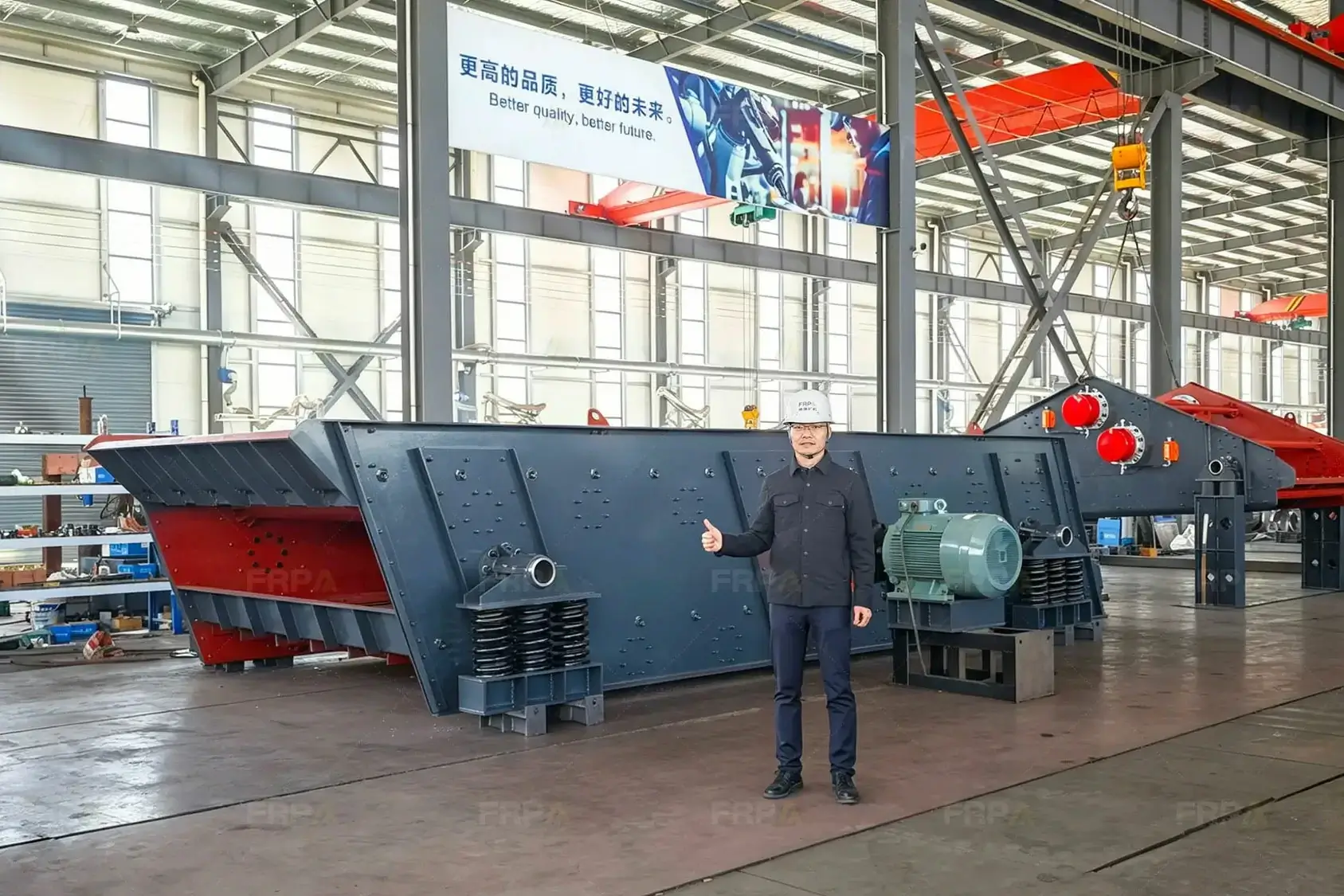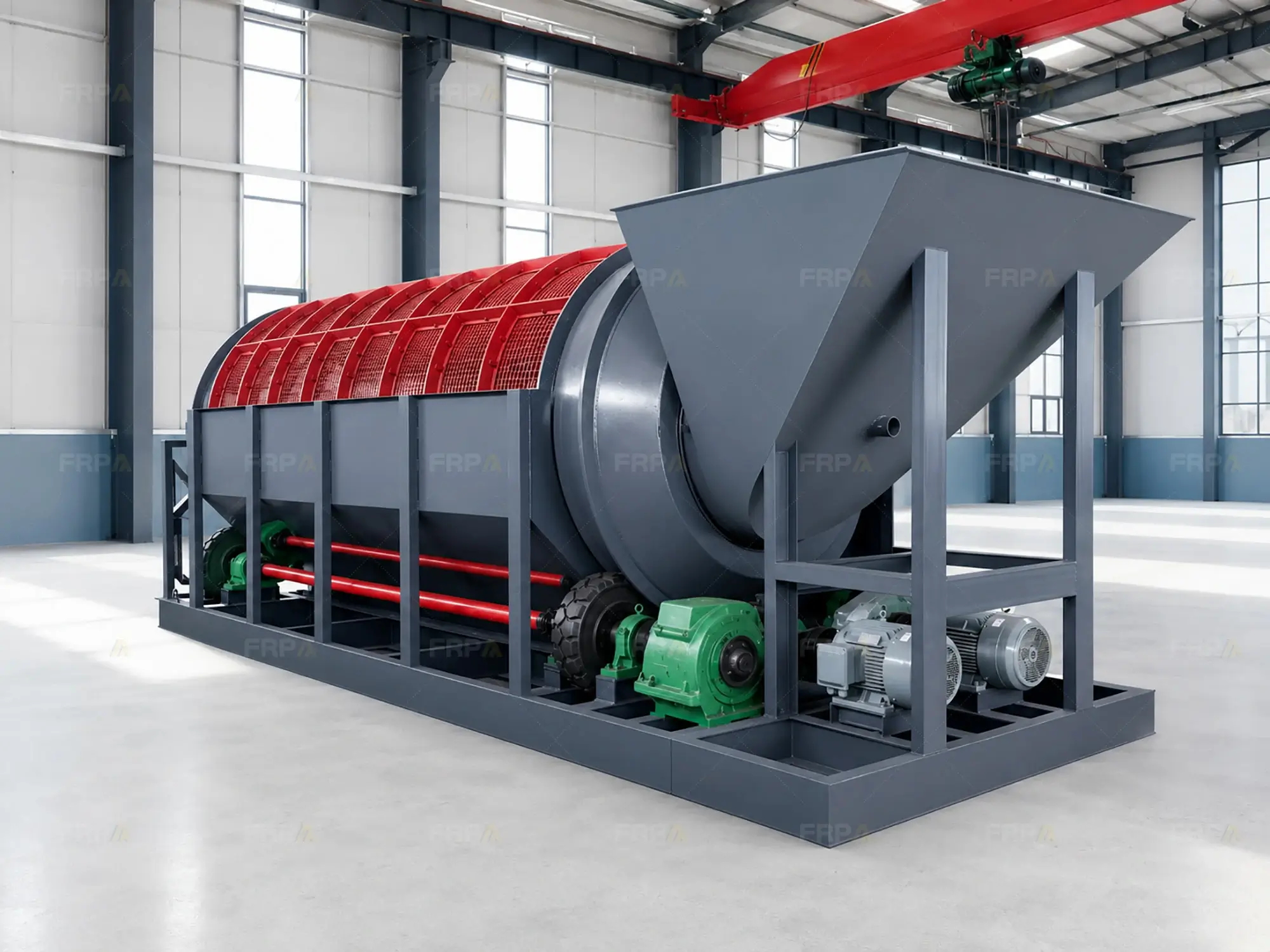





The FRP Roller Screen is a heavy-duty screening machine designed for efficient separation of fines from coarse, wet, and clay-rich materials. Using multiple synchronously rotating shafts, the equipment lifts, tumbles, and scrubs the feed, enabling rapid release of fines while conveying oversize material forward.
Installed ahead of primary crushers such as jaw or gyratory units, the roller screen removes fines and sticky clay before crushing. This reduces unnecessary crushing load, minimizes wear, and improves overall plant efficiency. Its non-vibratory, self-cleaning design ensures stable throughput and reliable performance even in high-moisture and high-clay conditions.


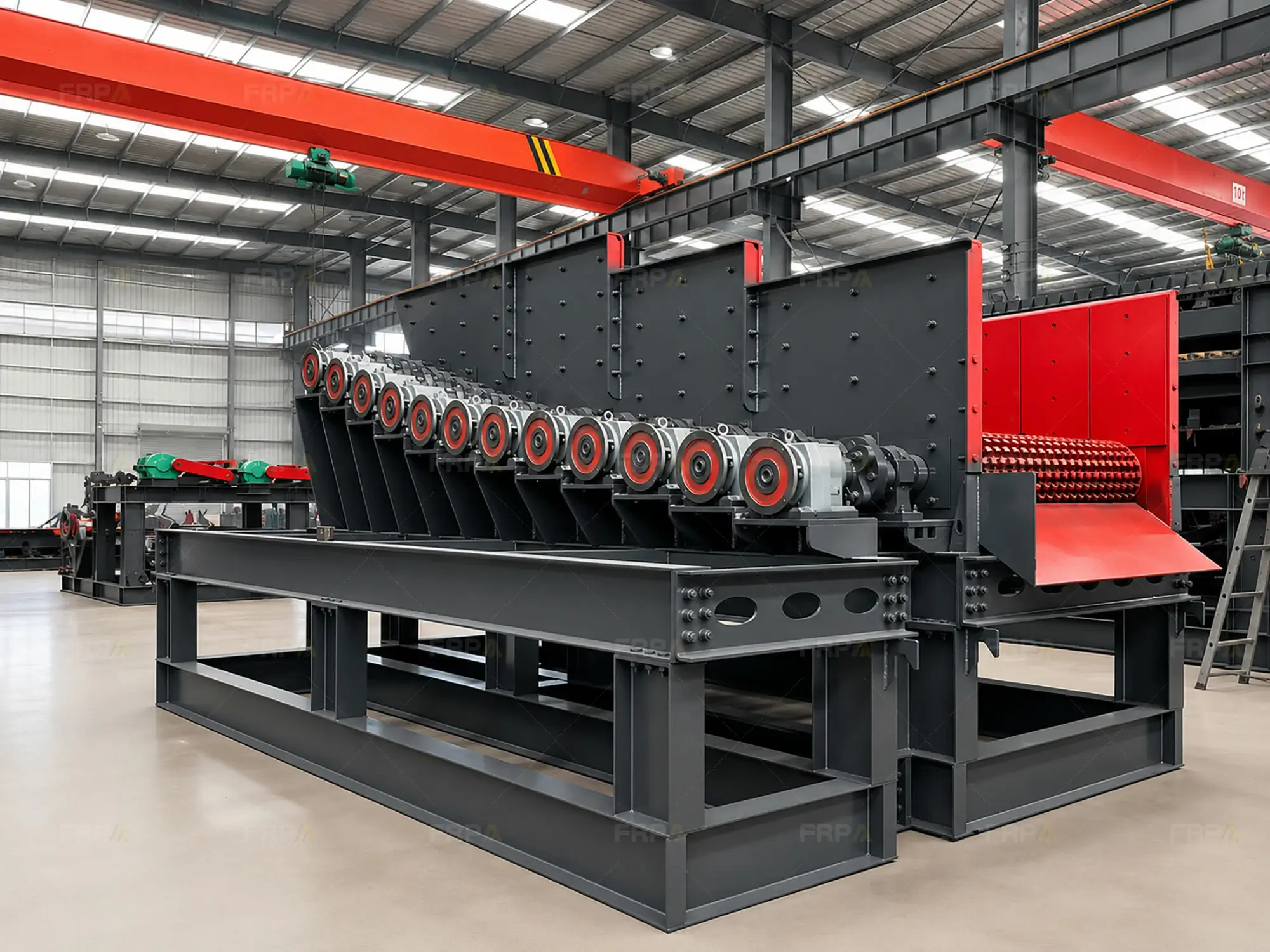
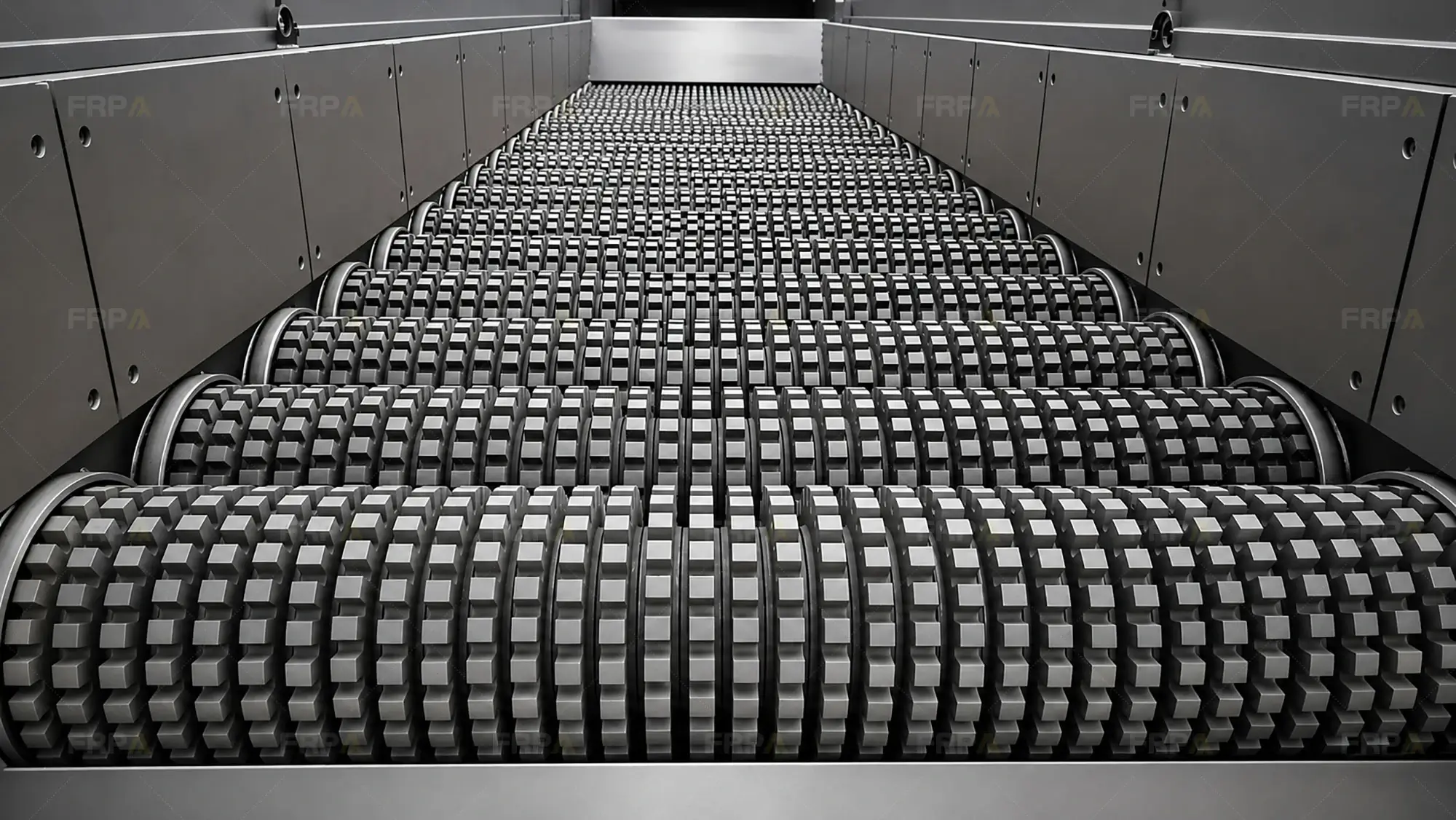
The FRP Roller Screen consists of multiple parallel shafts fitted with screening discs, forming a continuous screening surface. Each shaft rotates synchronously in the direction of material flow.
As material enters the screening zone, the rotating shafts lift, tumble, and scrub the feed. This action breaks down cohesive lumps and disperses sticky material, allowing fines smaller than the cut size to pass through the gaps under gravity and mechanical separation.
Oversize material is continuously conveyed forward along the shafts and discharged at the end of the machine, ensuring efficient separation and stable material flow.
Mining & Mineral Processing
Aggregate & Quarrying
Coal & Energy
Cement & Industrial Materials
Waste & Recycling
Smelting Slag & Metal Recovery
The FRP Roller Screen is commonly installed downstream of an apron feeder, forming a fully integrated feeding and scalping unit.
The apron feeder ensures controlled and stable material extraction from the hopper, while the roller screen performs efficient pre-screening by removing fines and clay before the material reaches the crusher.
👉 Typical layout: Hopper → Apron Feeder → Roller Screen → Crusher
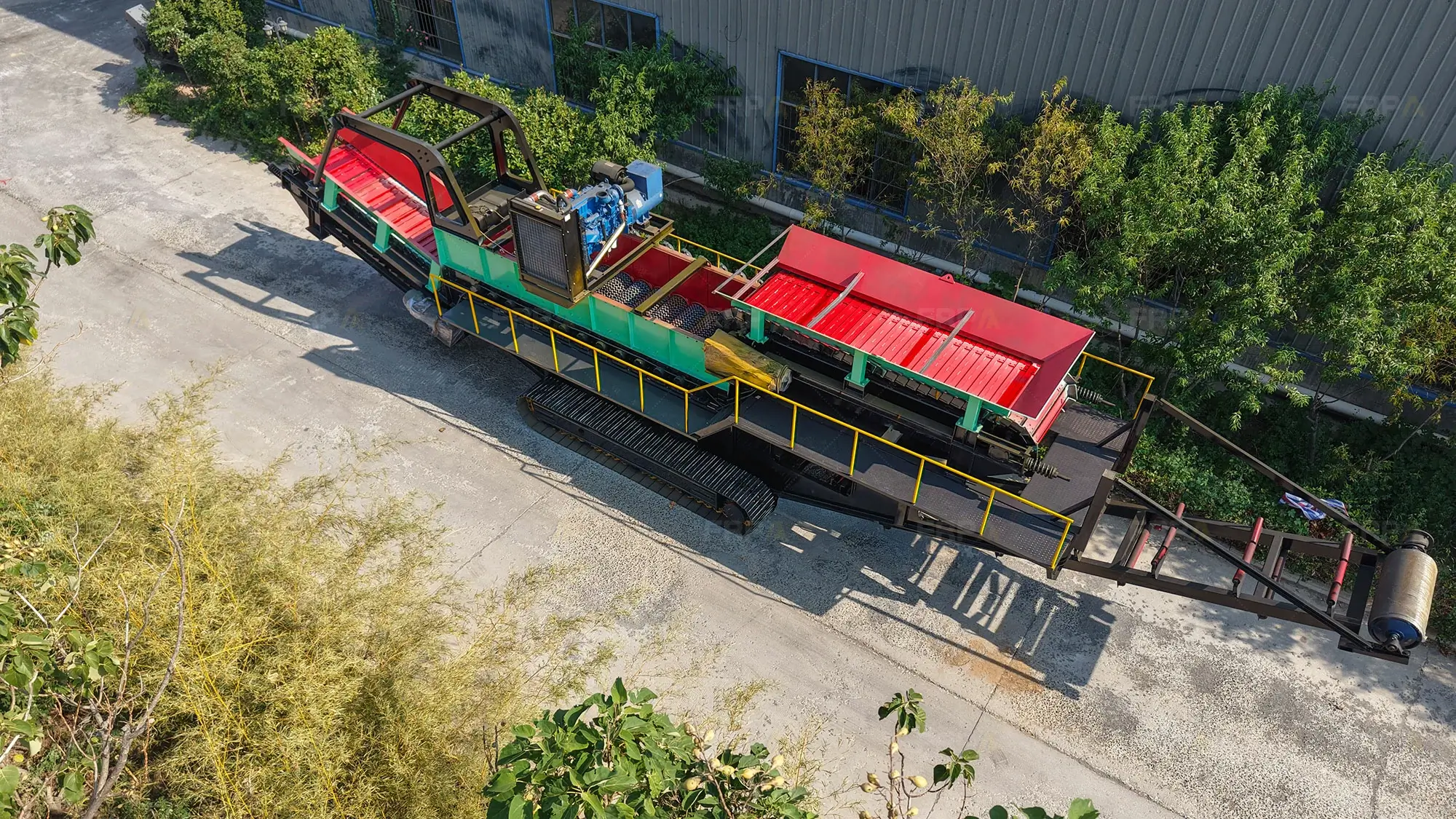
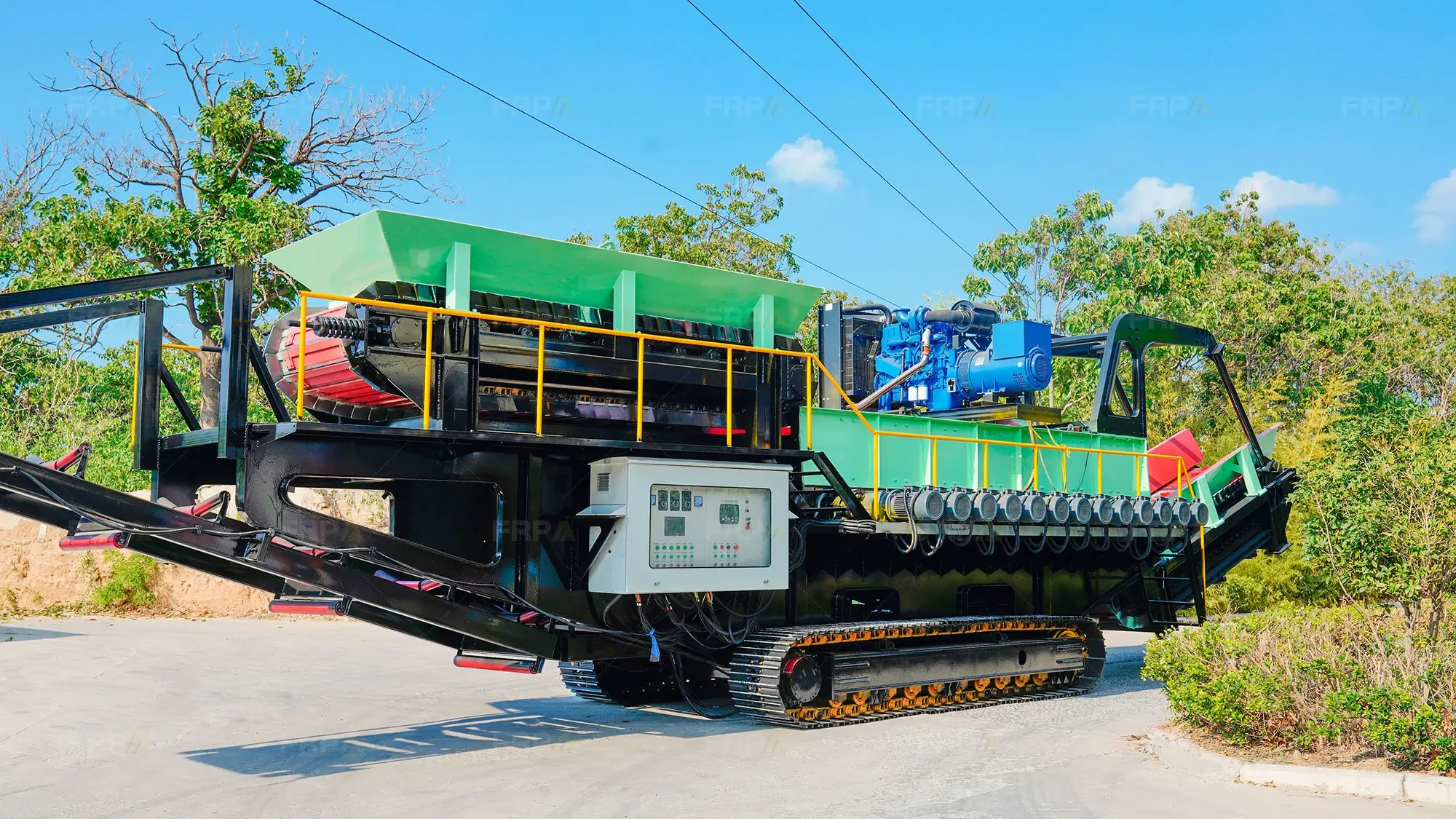
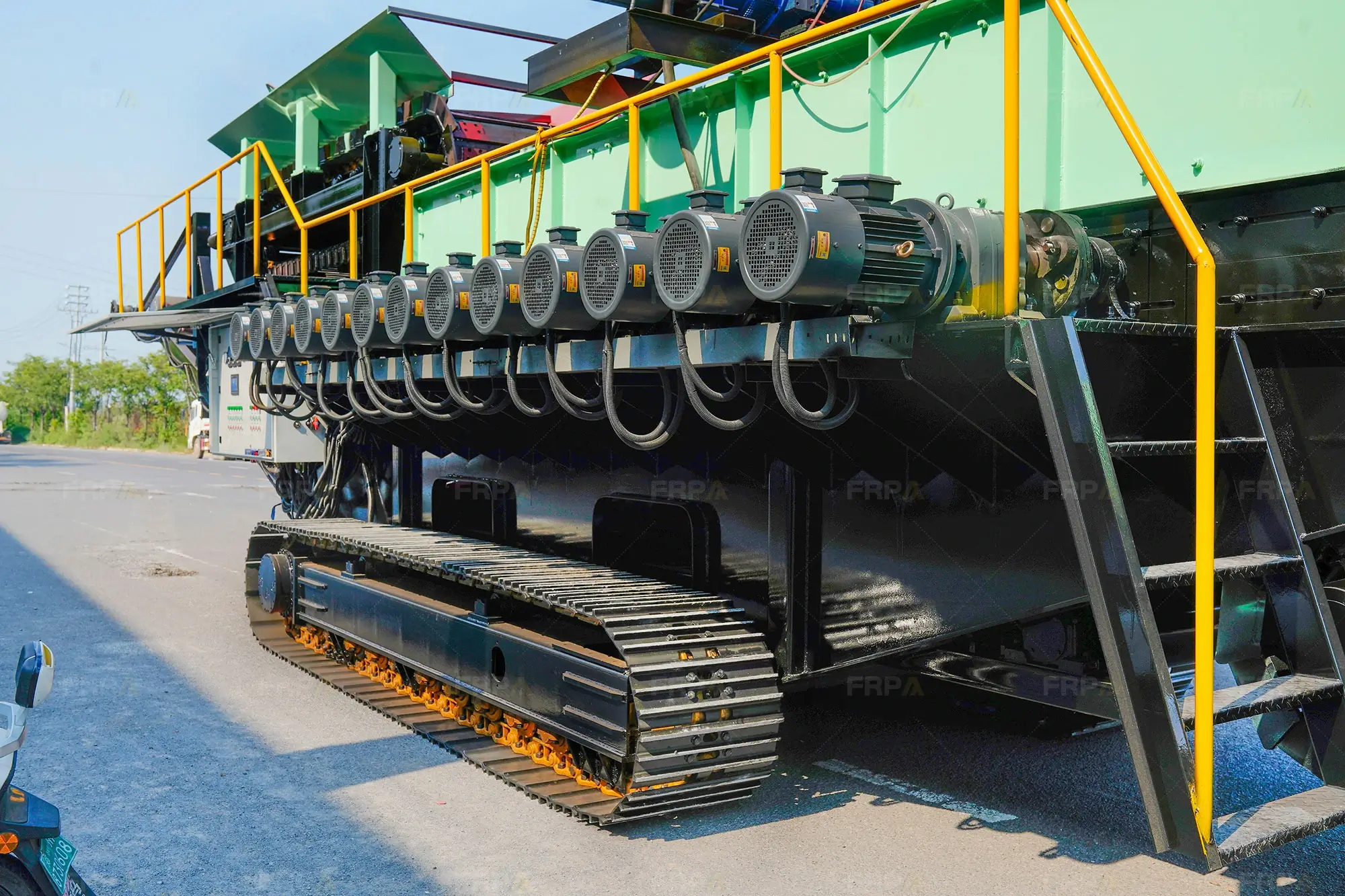
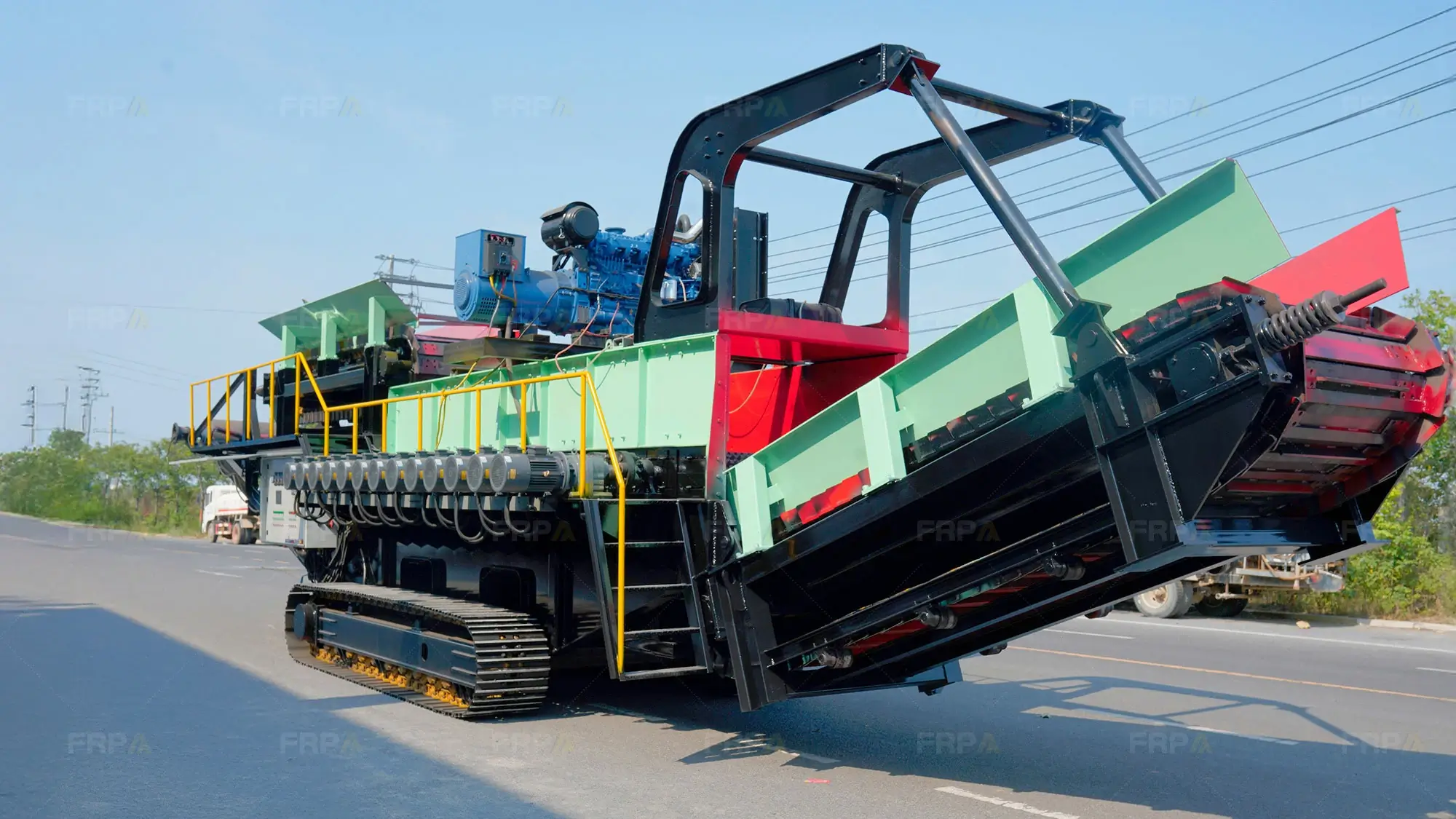
Configurable Installation For Stationary And Mobile Systems
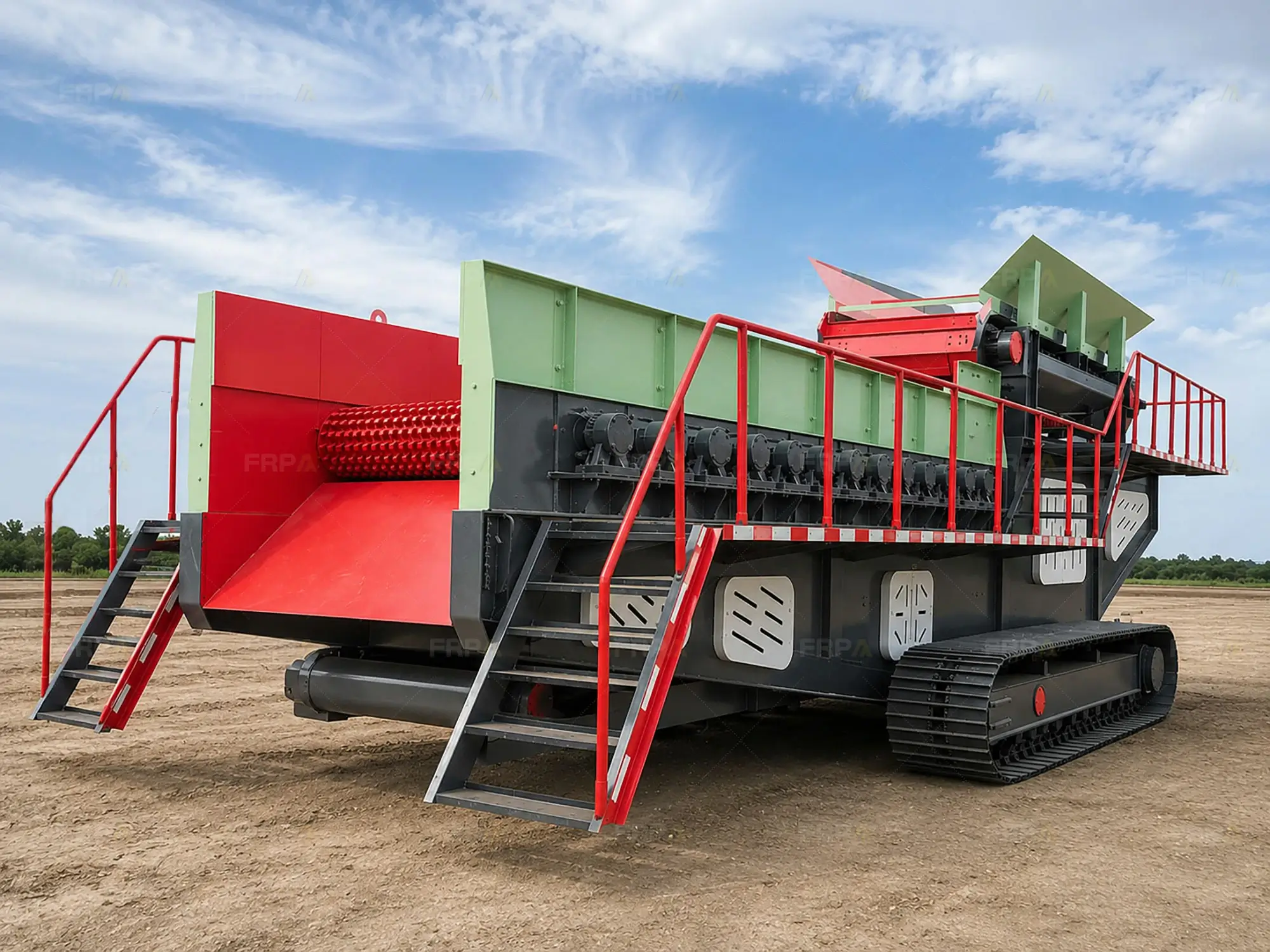
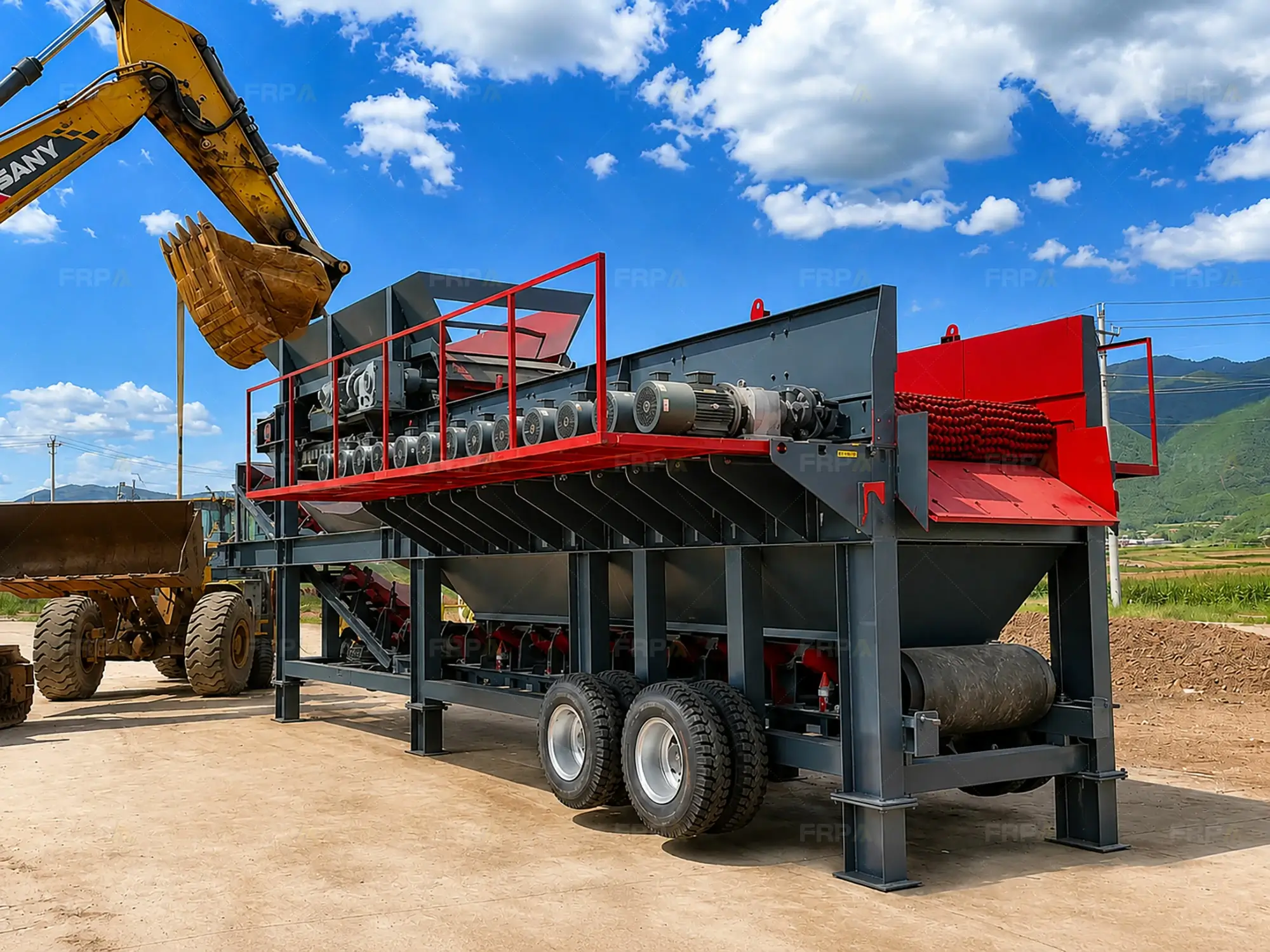
wheel-mounted unit
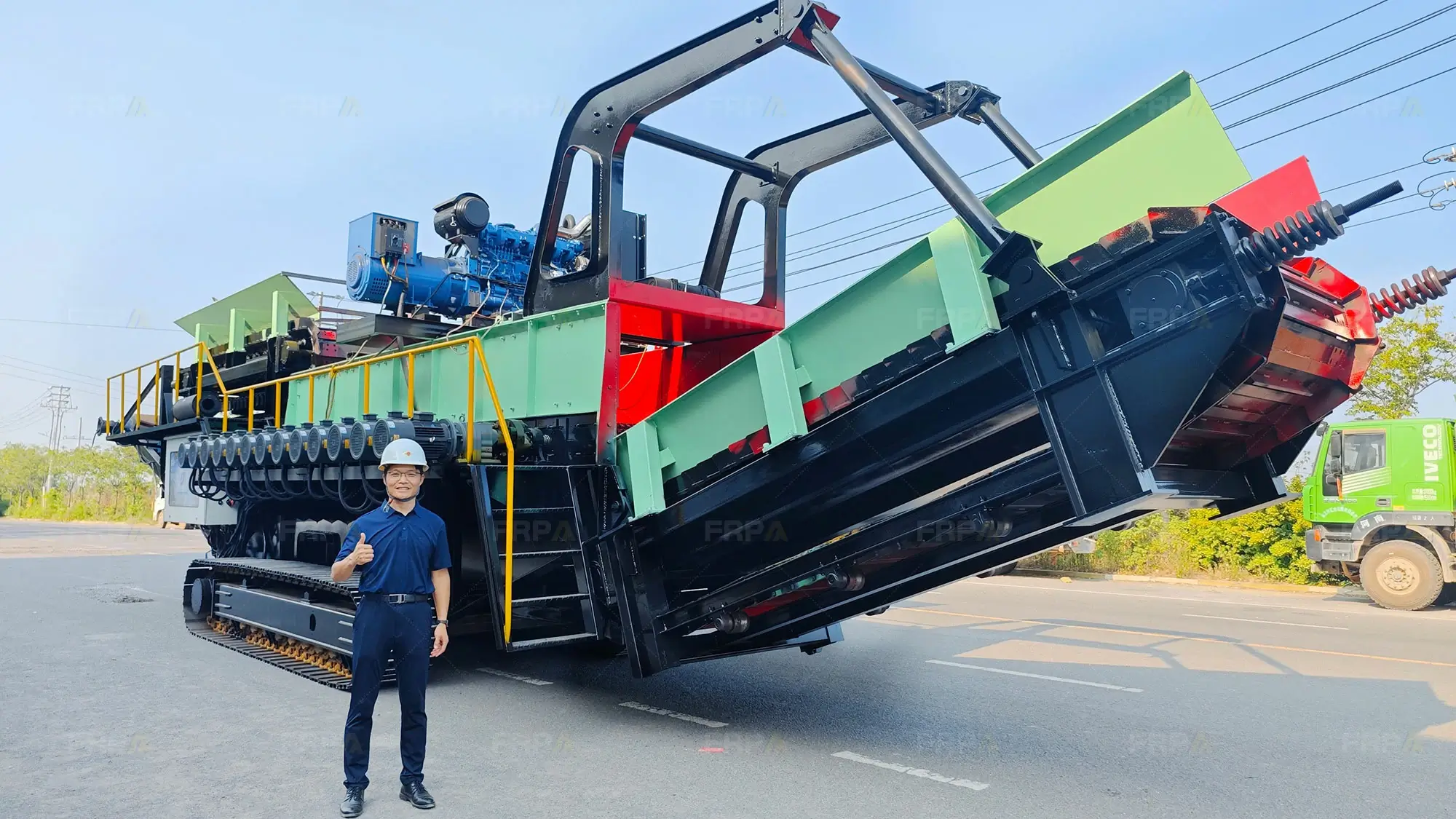
The roller screen can be configured as a stationary unit for fixed processing plants or as a mobile system for flexible operations. Mobile configurations include crawler-mounted units for rough terrain and frequent relocation, as well as wheel-mounted units for easier transport and fast setup. This ensures compatibility with a wide range of plant layouts, from permanent installations to modular and mobile crushing systems.
| Item | Roller Screen | Vibrating Screen |
|---|---|---|
| Working Principle | Uses multiple rotating shafts to lift, tumble, and scrub material for separation. | Uses vibration to stratify material and allow undersize particles to pass through the screen openings. |
| Best Suited Materials | Sticky, clay-rich, and difficult bulk materials. | Free-flowing, and less cohesive materials. |
| Anti-Clogging Performance | Excellent. The rotating shafts and self-cleaning action help prevent blinding and buildup. | More likely to experience blinding or clogging when handling sticky or high-moisture material. |
| Typical Process Role | Commonly used for pre-screening or scalping before primary crushing. | Commonly used for sizing, classification, and final product screening. |
| Performance In Wet Conditions | Performs reliably in high-moisture and clay-rich applications. | Performance may drop significantly in wet and sticky conditions. |
| Handling Of Coarse Feed | Well suited for coarse and bulky feed, especially ahead of crushers. | Suitable for a wide range of feed sizes, but performance depends on material condition and screen design. |
| Screening Accuracy | More suitable for coarse separation and pre-screening duties. | Better suited for precise classification and multi-size separation. |
| Dynamic Load And Vibration | Non-vibratory design with lower dynamic load and lower foundation demand. | High dynamic load due to vibration, requiring stronger structural support. |
| Maintenance In Sticky Material Applications | Lower maintenance due to self-cleaning operation and reduced clogging risk. | Higher maintenance when handling sticky material because of screen blinding and buildup. |
| Typical Applications | Mining, aggregate, coal, clay-rich material, crusher feed preparation. | Aggregate production, dry screening, final sizing, multi-deck classification. |
| When To Choose | Choose a roller screen when the material is wet, sticky, or clay-rich, and when stable pre-screening before crushing is required. | Choose a vibrating screen when the material is relatively dry, free-flowing, and when precise screening or multiple product sizes are required. |
We don't just deliver machines — we deliver assurance.
From installation to long-term service, we're by your side with ongoing support to keep your equipment running at its best.
Have a question, need advice, or want to schedule an appointment? We're happy to assist with any inquiries you have about our equipment and system solutions.